
 Song-saem: From Planner to Developer with AIBlog home →
Studying Words or Playing a Game? The Planning Behind Road Voca 2 (Building Road Voca 2, Part 2)
Road Voca 2 is my attempt to turn word-roots vocabulary study, from elementary school to TOEIC and university transfer exams, into a 3D racing game where you solve questions as you drive and meet missed words again. Here are my five reasons for planning it this way, what I’ve prepared so far, and what’s still left to do.

What was I thinking when I planned Road Voca 2? If the first Road Voca was closer to a study tool for reviewing words learned from a book, Road Voca 2 aims to be a 3D racing game where playing naturally leads into vocabulary study. It covers word-roots vocabulary from elementary school to TOEIC and transfer exams, and so far I’ve prepared some 2,500 words, about 3,000 learning images, and characters and vehicles. In this entry I share why I planned it this way and what I’ve prepared.
Solve as you drive, and meet missed words again
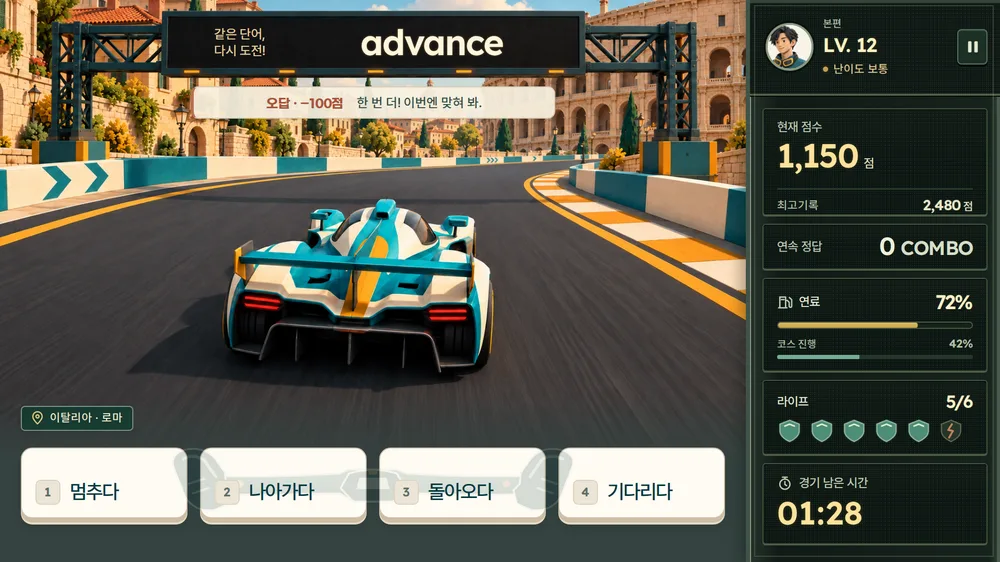
You drive along solving word questions, and the words you get wrong come back. You keep driving because you want to see the next road, and along the way you meet the words again and again. That’s a key idea in this plan.
Five reasons behind Road Voca 2
First, a word-roots program running from elementary school to TOEIC and transfer exams. The biggest goal is letting learners start from basic words and move on to harder vocabulary, connected within one program.
Second, making vocabulary study more fun. Words stick when you meet them many times. But even when you know you need to repeat, it isn’t easy to open the same word list again. I’d like the wish to play one more round to turn into review.
Third, learning to reason out meaning from a word’s structure. You look at how the front part and the root of a word combine, and think about the meaning from that combination. Even as I add fun, I want to keep this at the center.
Fourth, letting study and play flow into each other. Rather than feeling like you stop a game to work through a separate workbook, I want solving questions and trying again to be the game itself. Even better if it’s so fun you can’t tell whether it’s study or play.
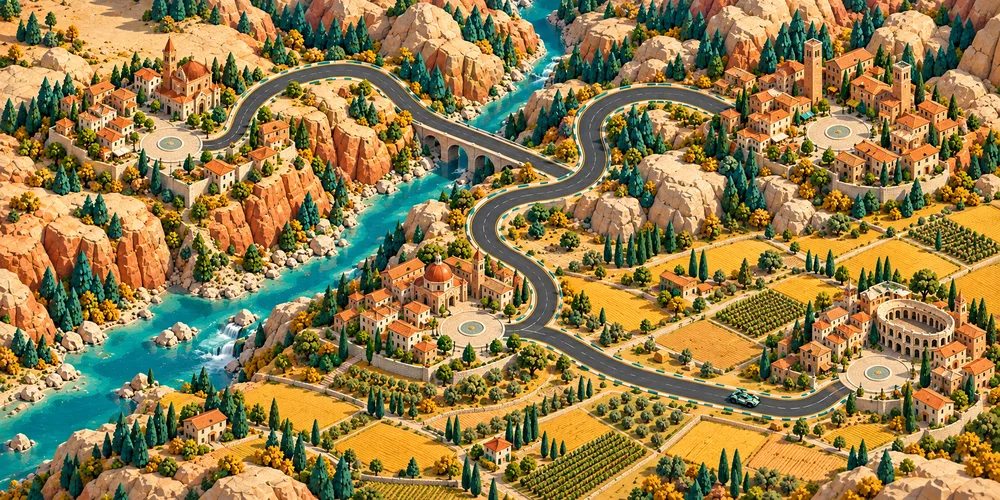
Fifth, 3D racing. I’m picturing a game where characters and vehicles move through a 3D space, passing cities, mountains and rivers while meeting words. I hope the fun of reaching the next section becomes a reason to keep studying.
It isn’t only a plan
A game like this needs a lot of material. I reorganized the word-roots data I’d built up, and made learning images, characters, vehicles and props. Putting together everything I’ve prepared, I realize I’ve taken on quite a big job.
| Area | What I’ve prepared |
|---|---|
| Word roots | Some 2,500 words chosen and refined from about 10,000 root analyses, running from elementary school to TOEIC and transfer exams |
| Learning images | About 3,000 root, word and meaning-expansion images in one art style |
| Characters and 3D | 10 characters (original art → 3D → animation), 19 vehicles, about 100 3D props |
| Game and questions | 100-stage race, several levels of questions per word (being designed) |
| Still left | Question data, sound and voice, connecting the app, test runs |
Some 2,500 words refined from about 10,000 root analyses
Based on about 10,000 analyses I built up while making my roots book, I chose and refined some 2,500 words that run from elementary school to TOEIC and transfer exams.
Collecting words isn’t enough. I reviewed how each word is split into roots and how it’s defined, and organized learning material on how the parts combine into the word’s meaning.
About 3,000 learning images
I made images that explain roots, images that show words, and images that show how meanings expand. Since they all go into the same program, I matched the art style too.
Making one image and making thousands feel the same turned out to be very different jobs. I also had to check whether each AI-made image really showed the word’s meaning, and redo the ones that didn’t.
10 characters, 19 vehicles and about 100 3D props
The 10 characters started as original drawings, then were moved into 3D and animated. It isn’t just making them look three-dimensional; it’s getting them ready to walk, run and jump.
I prepared 19 vehicles, including cars, bicycles and motorcycles, plus about 100 3D props to fill the roads and surroundings. Apart from the learning material, these are what make a game world you want to drive through.
Designing a 100-stage race and a learning path for each word
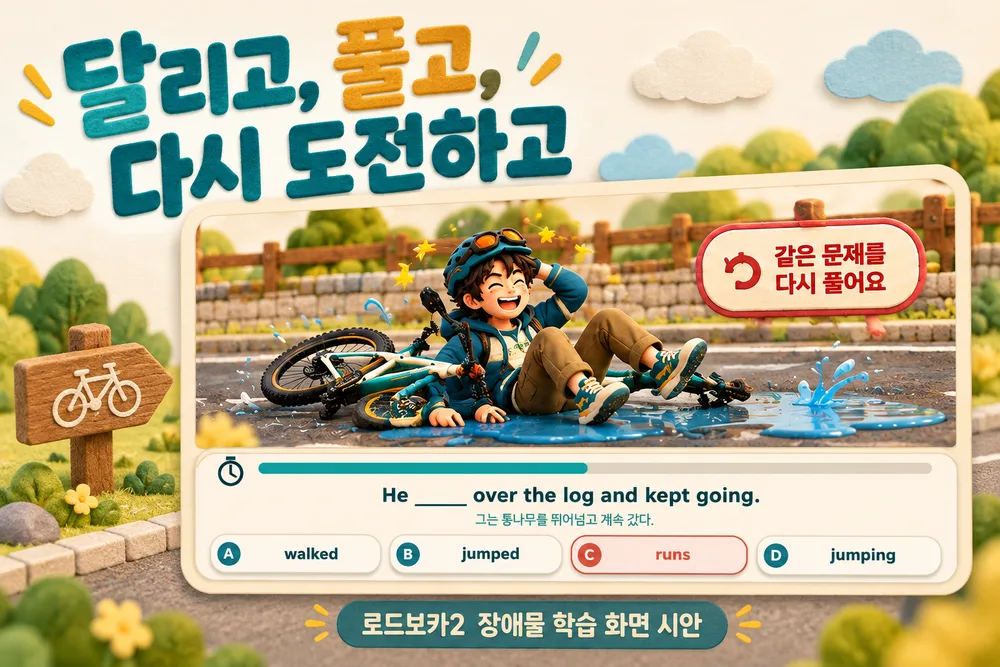
With these materials, I’m designing a race that runs through 100 stages. Each word gets several levels of questions, so learners don’t stop at guessing a meaning once but go on to roots and how the word is used in sentences.
Below is a mockup of the obstacle study screen, where you pick the word that fits a sentence. It moves from knowing a word’s meaning to its use in a sentence, and brings missed questions back.
There’s still connecting and checking to do
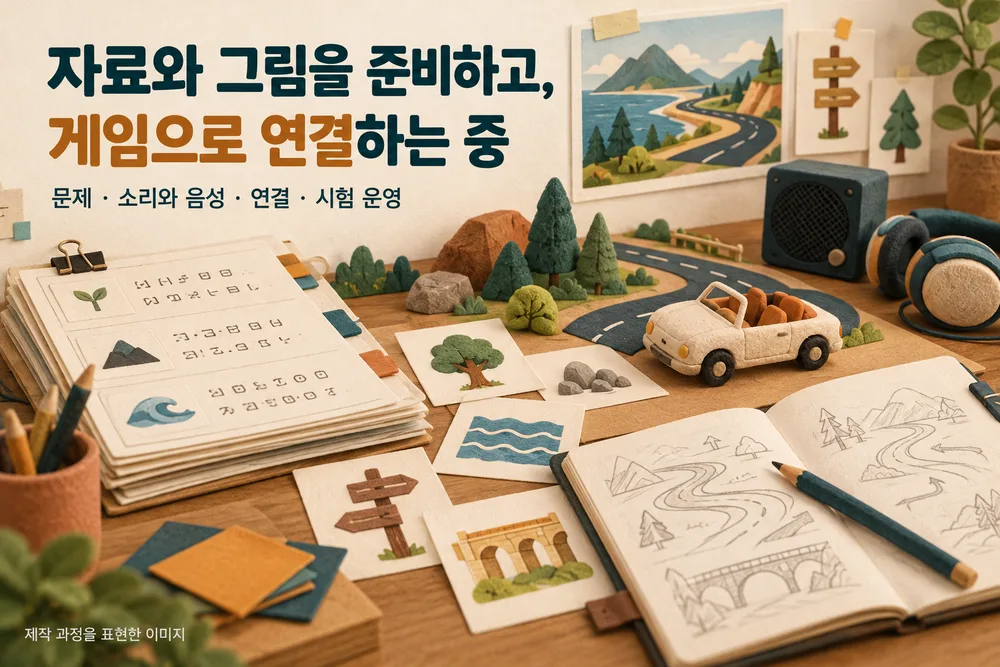
Preparing data, images and 3D materials doesn’t mean the game is finished. I still need to organize the question data, add sound and voice, and connect each piece inside the actual app.
After that come test runs. I want to check whether questions appear so often they break the flow, or whether players get so absorbed in the game that they skip past the words. I also need to see whether the fun I imagined matches the fun people actually feel.
A thousand troops and ten thousand horses
Some 2,500 words, about 3,000 learning images, characters and vehicles, and a 100-stage race. It’s a job that combines content, art, game design and programming. In the past, the cost and the amount of work would have made it hard to even attempt on my own.
I could start anyway because I had the material and database I’d built up, and because I thought I could get help from AI, which feels like having a thousand troops and ten thousand horses on my side. I call Claude the troops and GPT the horses.
Deciding what to build, checking the results and fixing what doesn’t fit is still my job. Even so, it’s fun to turn what was in my head into something real, one piece at a time.
From here on, I’ll record how these materials come together in the game and what I end up changing along the way. You can try the current Road Voca on the Road Voca website (one-pex.com).
In short
- Road Voca 2 is an attempt to turn word-roots vocabulary study, from elementary school to TOEIC and transfer exams, into a 3D racing game.
- You solve questions as you drive and meet missed words again, while the core of word-roots study, reasoning out meaning from a word’s structure, stays.
- I’ve prepared some 2,500 words, about 3,000 learning images, 10 characters, 19 vehicles and about 100 3D props.
- Question data, sound and voice, the app connection and test runs are still left.
The way I learned to break big jobs into parts and check them with AI while building the business system FROX at ONE-PEX is carrying straight over into Road Voca 2.
Next (Part 3): How building changed, from Road Voca 1 in Unity to Road Voca 2 running in the browser.
Related reading: Building Road Voca 2, Part 1: Why I’m Remaking My Word Game After 25 Years of Teaching English

A software planner who became a developer after two years of working with AI five to twelve hours a day. Today I build FROX, an AI-powered business system, at ONE-PEX.
More posts
- What Can You Build with AI?Orders in KakaoTalk, Stock in Excel, Receivables in a Notebook: Changing Messenger Orders Only the Owner Understands (Food Supplier, Part 1)
- What Can You Build with AI?I Fixed My TWA App, So Why Didn't It Change? What I Learned from the War with Caching
- What Can You Build with AI?Details Matter: Splitting 3D Characters and Vehicles So They Can Move (Building Road Voca 2, Part 5)